Build Interview Responses Like Reusable Code Modules

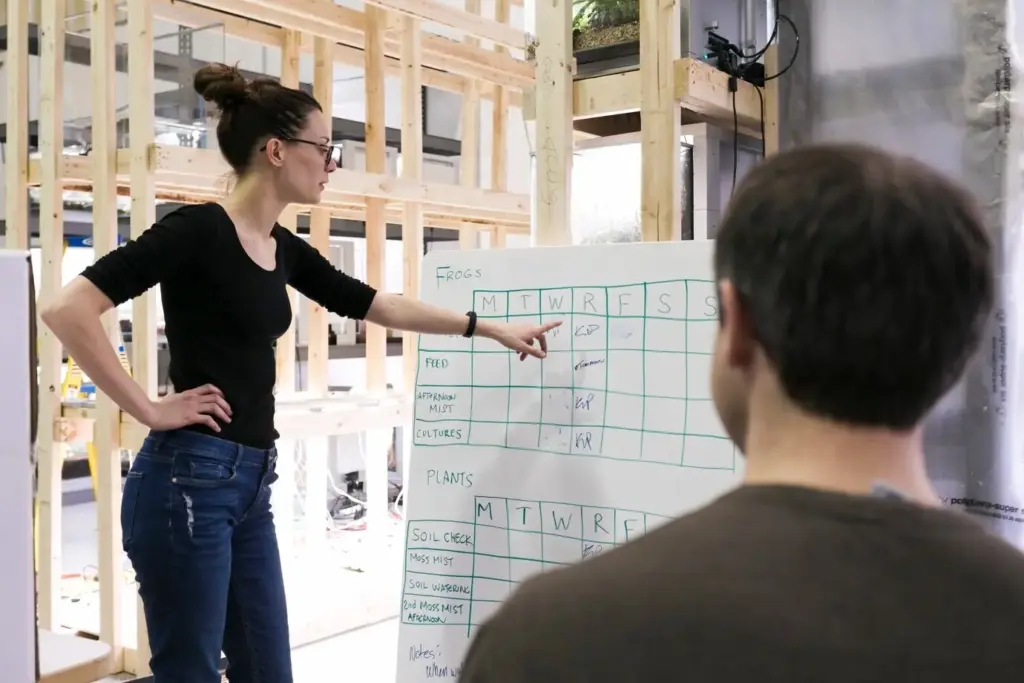
Today we focus on modular templates for technical and coding interview responses, transforming pressure into clarity with repeatable structures that scale. You will learn to assemble clarifying questions, planning steps, complexity analysis, and testing rituals like interlocking pieces that fit algorithms, data structures, systems design, and behavioral conversations. Expect memorable acronyms, story scaffolds, and timeboxing strategies that keep you calm, fluent, and adaptable from the first prompt to the final follow-up. Bring a notepad, because we will craft a small, personalized library of answer modules you can remix confidently across companies, formats, and difficulty levels.

Principles of Building Answers Like Modular Code

Great interview responses mirror reliable software: they keep responsibilities separated, expose clear interfaces, and assemble predictable behavior under stress. When you treat each part of your explanation as a swappable module—clarification, plan, trade-offs, testing—you reduce cognitive load and increase consistency. A robust library of reusable answer components helps you navigate noisy rooms, ambiguous requirements, and unexpected pivots. By practicing modular phrasing and structured transitions, you give interviewers confidence that you can reason clearly, adapt fast, and collaborate well. These principles travel with you, regardless of language, company, or role, making your preparation efficient and durable.

A Reliable Template for Coding Questions

Use a repeatable flow that signals clarity and reduces surprises: restate the problem, clarify inputs and constraints, generate small examples, propose a brute-force approach, evolve toward an optimal solution, discuss complexity, implement cleanly while narrating, and validate with targeted tests. This structure shows your ability to reason incrementally, handle ambiguity, and prioritize correctness before micro-optimizations. It also invites the interviewer into your process, making the session collaborative rather than adversarial. The result is a dependable cadence you can trust, even when the prompt arrives with twists.

Clarify, Constraints, and Canonical Examples

Open by restating the goal in your own words, then pin down constraints: input sizes, data ranges, memory limits, mutation rules, and error conditions. Craft one trivial and one slightly complex example to expose corner cases. Ask targeted questions rather than vague ones, ensuring you lock down expectations early. This disciplined start reduces rework and demonstrates thoughtful engineering instincts that guard quality from the first minute.

Brute Force to Optimal, with Complexity First-Class

Propose a straightforward baseline to ensure correctness, then progress to improved strategies while narrating trade-offs. Quantify time and space complexity at each step, relating choices to constraints. Explain why a data structure or algorithm unlocks performance. Share the decision path, not only the destination. Interviewers learn how you navigate ambiguity, prune options, and keep complexity analysis visible, which mirrors real-world design discussions where clarity trumps cleverness.

Testing, Edge Cases, and Safe Refactors While Speaking

Before running, simulate inputs manually, including empty sets, duplicates, extremes, and adversarial cases. Narrate expected results and verify them step by step. If issues appear, propose a minimal refactor with a clear rollback plan, protecting working pieces. This careful, test-first mindset shows discipline under pressure. It also invites collaboration, because you keep your reasoning inspectable, enabling the interviewer to help unblock or refine your approach constructively.

System Design, Structured as Composable Layers

Approach system design as an adaptable stack: clarify goals, non-functional requirements, and scope; sketch a high-level architecture; reason about data modeling and storage; plan communication patterns; address scaling, reliability, and cost; and finally outline evolution paths. Each layer communicates its assumptions and exposes neat interfaces to the next. This layered approach prevents getting lost in details and keeps decisions explainable. It also lets you adjust the depth on cue, spending time where the interviewer’s curiosity is strongest.

Use Cases, SLAs, and Growth Assumptions

Start by enumerating core use cases, priority user journeys, and success metrics. Translate them into SLAs like latency budgets, availability targets, and data durability. State growth assumptions—traffic profiles, read-write ratios, regional distribution, and peak patterns. These anchors justify every architectural choice that follows. Interviewers see you design from first principles, ensuring the system’s shape mirrors real demands rather than fashionable components or premature optimizations.

High-Level Architecture, Data Flow, and Storage Choices

Sketch the main components: API gateways, services, queues, caches, and data stores. Describe data flow, serialization formats, and partitioning strategies. Explain why you chose specific storage technologies by aligning access patterns, consistency needs, and write amplification trade-offs. Highlight back-pressure handling and failure modes. This narrative demonstrates that you balance practicality with scalability, and that your mental model gracefully supports both current requirements and near-term growth.

Bottlenecks, Trade-offs, and Evolution Plans

Identify likely hotspots—indexes, coordination points, large fan-out requests—and propose mitigations. Compare consistency models, caching strategies, and sharding approaches with explicit pros and cons. Outline a phased rollout plan, including observability gates, dark launches, and cost guardrails. Finish with a plan for the next order-of-magnitude scale. Interviewers value this candor because it resembles real architecture reviews, where acknowledging risks is a sign of readiness, not weakness.

Behavioral Answers with Narrative Engineering

Treat behavioral questions as structured narratives powered by evidence. Use a consistent storyline scaffolding to align context, obstacles, actions, results, and lessons. Emphasize the measurable impact, the trade-offs you navigated, and how you collaborated across roles. Modular story blocks help you adapt length, insert metrics, and expose decision frameworks that generalize. This approach reveals accountable leadership, thoughtful communication, and growth mindset—qualities that matter as much as code quality. Structured storytelling also reduces rambling, making your experience memorable and verifiable.

Communication, Signposting, and Time Management

Deliver answers with visible structure: open with a roadmap, keep time checkpoints, and summarize progress at transitions. Name the next milestone before diving into details. Use unambiguous terminology and narrate decisions crisply. If you need to pivot, do so explicitly and explain the rationale. These practices help interviewers follow, collaborate, and fairly assess your thinking. They also buy you time because clear signposting reduces interruptions and prevents misunderstandings that lead to costly rewinds during the session.

Open with a Roadmap, Maintain Checkpoints

Start with one sentence stating your intended path, then list the key steps you will follow. Establish lightweight checkpoints every few minutes to confirm alignment. If the interviewer redirects, update your roadmap aloud. This practice keeps expectations synchronized and showcases your ability to project-manage under uncertainty. It also ensures you finish with a tidy summary rather than trailing off as time expires.

Visuals and Whiteboard Hygiene

Use consistent, legible notation and group related elements visually. Label axes, data flows, and assumptions. Circle decisions, box constraints, and keep error paths distinct. Clean diagrams accelerate shared understanding and reduce cognitive load. Even remote interviews benefit from structured visuals. Clear artifact hygiene is a direct signal of engineering clarity, helping your reasoning earn trust while preserving precious minutes otherwise lost to confusing scribbles or verbal detours.

Active Listening and Adaptive Pacing

Invite interruption, pause for feedback, and paraphrase guidance to confirm understanding. Adjust pacing based on signals—slow down for complexity, speed up for familiar ground. When unsure, propose a small experiment or example instead of guessing. Adaptive communication keeps collaboration healthy and turns the interviewer into a partner. This dynamic also reveals coachability and humility, traits teams prize as much as raw technical horsepower.

Build Your Repository of Templates

Organize modules for clarifications, planning, complexity, testing, and wrap-ups, plus reusable diagrams and story beats. Version them like code and annotate with examples. Map patterns to roles or industries to personalize quickly. Over time, prune stale material and promote what consistently lands well. This tangible library reduces anxiety on interview day because you can rely on proven building blocks rather than improvising from scratch.

Drills, Mocks, and Retrospectives

Schedule short, focused drills that target single modules: five-minute clarification sprints, complexity narrations, or test-design bursts. Run full mocks weekly with varied prompts and constraints. Immediately conduct retrospectives to capture signals while fresh. Iterate one small improvement per session. Consistency beats intensity. Share your takeaways with a study group, invite critique, and exchange patterns. Collective practice accelerates learning and keeps motivation high through accountability.
Nizaxapenokakotizi
Privacy Overview

This website uses cookies so that we can provide you with the best user experience possible. Cookie information is stored in your browser and performs functions such as recognising you when you return to our website and helping our team to understand which sections of the website you find most interesting and useful.